WordPress or a Website Builder: What Brisbane Businesses Should Weigh Up
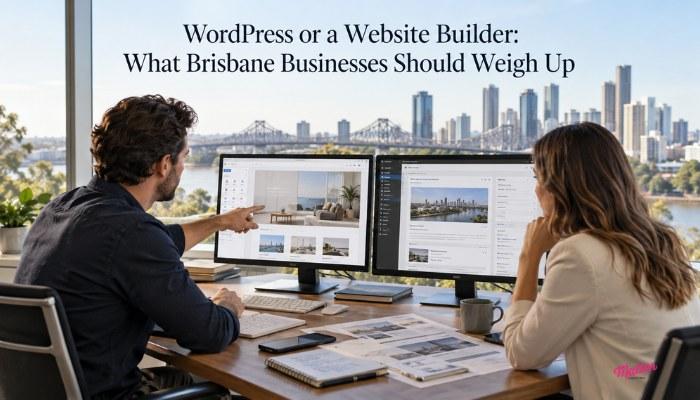
As a Brisbane business owner, you should compare WordPress and website builders across several categories, including cost, ease of use, and SEO capabilities. But which factors deserve the most attention, especially if you’re working with a limited budget or technical resources?
We’ve asked ourselves that same question. Matter Solutions has been building websites for Brisbane business owners since 2000. Every time WordPress released an update or a website builder added a new feature, we had to reconsider which option suited each client best.
We built this guide around what that experience taught us. We’ll compare WordPress and website builders across six categories to help you choose the right option for your business.
What’s the Difference Between WordPress and a Website Builder?

WordPress is a free, open-source content management system. You install it yourself, then build and customise your site through themes, plugins, and code.
Website builders like Wix and Squarespace bundle most of these things into one platform. You just pick a template, customise it with a visual editor, and publish your site without setting up separate hosting.
One option asks you to set everything up. The other has it built in already. That single difference decides how each handles cost, control, and web design choices in the sections ahead.
6 Factors to Weigh Up When Choosing Between WordPress and a Website Builder
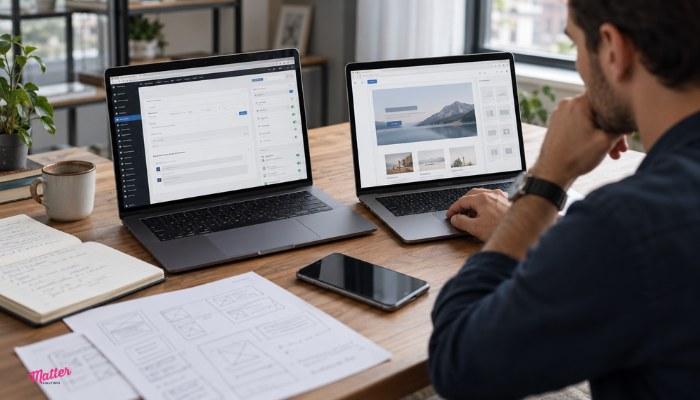
We’ll compare WordPress and website builders across six factors: upfront and ongoing costs, ease of use, customisation, SEO capabilities, maintenance, and scalability. Let’s start with the first one.
1. Upfront Costs and Ongoing Expenses
Website builders give you a fairly predictable starting point: pay a subscription fee, and you get hosting and the features included in your plan.
For example, Wix lists its Light plan at $17.77 per month, while Squarespace lists its Basic plan at $12 per month. Higher tiers with more features can cost well over $100 a month.
WordPress works differently. The software is free, but you’ll need hosting. You might pay for a premium theme, plugins, or a developer to build the site for you.
So, which option costs less?
It depends on what you’re building. A simple WordPress site with affordable hosting and free tools can cost less than a website builder subscription. But add a custom design, premium plugins, and ongoing developer support, and the bill can climb quickly.
The reverse is true, too. A website builder might look affordable at first, but paid apps or a higher-tier plan can increase your costs as your needs grow.
2. Ease of Use and Website Management
Website builders are built for complete beginners. You drag and drop sections onto the page, swap images, and edit text without touching a line of code.
Most platforms now include AI tools, too, which can generate layouts or draft copy to speed up the website-building process. Their visual editors make routine changes simple, even for people with no technical skills.
WordPress asks more of you upfront. Its built-in editor handles layout well, but managing plugins, updates, and backend settings requires some familiarity with the platform.
Once you’ve configured your site, though, routine tasks such as editing text, replacing images, and publishing pages are relatively simple. You won’t necessarily need a developer for everyday changes.
3. Design Flexibility and Customisation
Both options can give your business a professional-looking website. The difference is how far you can take the design.
With a website builder, you start with a template and customise its colours, fonts, images and page layouts to match your brand. This gives you a polished, branded website without needing to hire a designer.
WordPress gives you more range to go beyond the standard options. You can choose from free and paid themes and plugins or hire a developer to create a site built around your requirements.
Let’s say you want to build a business website with service pages, customer testimonials, and a contact form. Either option can handle that.
Now imagine you need a booking system with a specific workflow, a customer membership area, or an integration with software your team already uses. WordPress will give you more ways to customise these features, although you may need a developer to build them.
That doesn’t mean a website builder can’t do the job. Many offer booking tools, e-commerce functionalities, and third-party integrations. You just need to check whether their available features match your requirements before signing up.
4. SEO and Online Visibility
WordPress and website builders can both help your business appear in search results. Neither guarantees higher rankings, so your decision should come down to the SEO tools and level of control you’ll need.
Website builders typically let you edit page titles, meta descriptions, URLs, and image alt text. Depending on the platform, you may also be able to manage redirects, structured data, and other technical SEO settings.
WordPress supports these tasks through its built-in features, plugins, and custom development. SEO plugins like Yoast SEO and Rank Math can help you manage metadata, XML sitemaps, canonical URLs, and structured data. You also have more freedom to choose your hosting, site speed, and performance tools.
Why would that extra control be useful?
Say your Brisbane business relies on organic traffic to generate leads. You might start with a handful of service pages. Then expand into blog posts, location pages, and detailed guides to attract customers at different stages of their search. As your website grows, you may need more control over its structure, internal links, and technical SEO settings.
WordPress gives you plenty of room to make those changes. A website builder may offer everything you need, too, but its capabilities depend on the platform and plan you choose.
5. Security, Updates, and Maintenance
Every website needs ongoing security work. The question is who’s doing it.
Website builders handle this for you. Hosting, platform updates, and security patches happen automatically in the background, so you don’t need to think about keeping your site secure.
WordPress puts more of that responsibility on you or your developer. You need to keep the core software, themes and plugins updated to reduce security risks and maintain compatibility.
Staying up to date takes effort, but you control exactly when and how those updates happen.
6. Scalability and Future Business Needs
When we build websites, we often see businesses focus on what they need right now and forget about what comes next.
Maybe you only need a few pages and a contact form today. But what happens when you want to start a blog, take online bookings or sell products through your website? If your platform doesn’t support these features, you might need to switch to another one, which takes extra time and effort.
That’s why you should think about your future needs before choosing a platform. And when it comes to website builders, it’s relatively easy to add common features through built-in tools, paid plans and third-party apps. However, you’re limited to the features and integrations the platform supports.
WordPress gives you more flexibility. You can install plugins to add booking systems, e-commerce features and other functionality, or hire a developer to build custom solutions as your business grows. This gives you greater freedom when your needs go beyond what standard website builder tools offer.
WordPress vs Website Builders: Which Is Right for Your Brisbane Business?
Neither option is automatically better. A website builder generally offers a simpler setup and less technical maintenance, while WordPress gives you more control over how your site develops.
Your choice depends on your website’s needs, the time you can commit, and where the business is headed. Here’s a closer look at when each option makes the most sense.
When WordPress Makes More Sense
WordPress is worth considering if:
- You Plan to Invest in Content and SEO: If organic traffic is central to your digital strategy, WordPress gives you greater flexibility when managing a growing library of articles, service pages, and landing pages.
- You Need Specialised Functionality: Custom booking workflows, membership areas, and integrations may be easier to build with WordPress plugins or help from a developer.
- You Want Greater Control Over Your Website: You can choose your hosting, customise the design, and extend functionality as your requirements change.
- You Have Technical Support Available: An in-house team or external developer can help manage updates, security, and advanced customisations.
Just account for the ongoing work and costs involved in managing it as your site grows.
When a Website Builder Is the Better Fit
A website builder may suit your business better if:
- You Need to Get Online Quickly: Templates and built-in editing tools can help you launch without arranging separate hosting or commissioning a custom build.
- You Want Predictable Costs: A subscription makes budgeting easier when the included features meet your requirements. To avoid unexpected expenses, check renewal prices and the cost of any extras before committing.
- You Prefer to Manage the Site Yourself: Visual editing tools make it easier to update service pages, change images, and publish content without technical assistance.
- Your Website Needs Are Basic: If you need a professional website with service information, contact forms, and basic SEO tools, you may not need WordPress’s additional flexibility.
In case your needs grow beyond what a builder offers, switching to a more flexible platform later is possible. But it can mean rebuilding content and losing some search rankings in the process.
Make the Right Choice for Your Business Website
Now you know what to weigh up when choosing between WordPress and a website builder. Think about what you need from your website today, how much control you want over it, and how your needs might change as you grow.
If you’re still not sure which platform is right for you, Matter Solutions can help. We provide WordPress web design in Brisbane, along with ongoing support to help your website keep pace with your business.
Visit this website: Primelooseleaf.com: Website, Content, and Key Features
Get in touch with our team to discuss your plans and find the right fit for your website.