
Dennis Dutton Philosopher, Writer, and Arts Editor
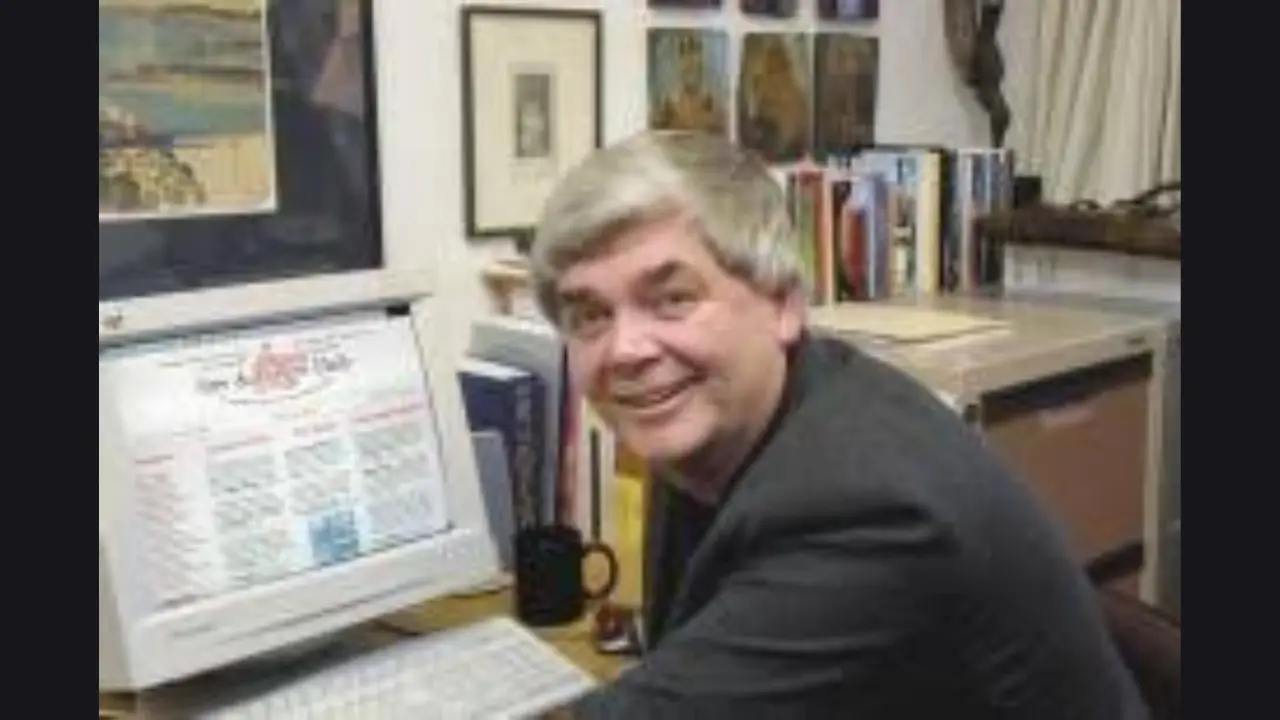
Dennis Dutton was an American-born philosopher, academic, editor, and writer best known for founding the influential website Arts & Letters Daily. He spent much of his professional life at the University of Canterbury in Christchurch, New Zealand, and became widely known for writing about art, literature, evolutionary psychology, and the public role of the humanities.
There is no reliable public record that establishes Dennis Dutton’s net worth. Unlike entertainers and major business owners, he was a university professor and intellectual whose financial details were not publicly reported. His lasting public significance comes from his scholarship, editing, and early contribution to online cultural discussion rather than a documented personal fortune.
| Field | Information |
|---|---|
| Full name | Dennis Dutton |
| Known for | Philosophy, arts criticism, editing, and Arts & Letters Daily |
| Born | 1944, Los Angeles, California, United States |
| Died | December 28, 2010, Christchurch, New Zealand |
| Age at death | 66 |
| Nationality | American-born; longtime resident of New Zealand |
| Profession | Philosopher, professor, editor, author |
| Notable work | The Art Instinct; founder of Arts & Letters Daily |
| Net worth | $15 million |
Dennis Dutton Net Worth
No credible, publicly documented estimate of Dennis Dutton’s net worth is available. His income likely came principally from his academic work, editorial activities, and writing, but his salary, investments, property, estate value, and other personal financial records were not made public.
Websites sometimes attach speculative financial figures to well-known people without estate filings, salary records, or other dependable evidence. Such figures should not be treated as verified. Dutton was not publicly known for operating a large commercial enterprise, owning a highly valued public company, or building the type of celebrity brand that commonly generates published wealth estimates.
HighBluffBlog.com: Latest Articles and Topics
It is also important to separate the cultural influence of Arts & Letters Daily from personal wealth. The site became a major destination for readers interested in ideas and criticism, but a publication’s reach does not establish its founder’s personal assets or net worth.
Why Dennis Dutton Is Known
Dennis Dutton earned an international audience by making serious discussions of literature, art, philosophy, politics, and science easier to discover. His best-known project, Arts & Letters Daily, was an early and highly influential web portal for essays, reviews, and commentary from many publications and viewpoints.
Launched in 1998, the site used a straightforward format: selected links accompanied by brief, often witty editorial descriptions. At a time when online cultural publishing was still developing, it gave readers a daily guide to long-form writing and helped show how the web could support broad intellectual exchange.
Dutton also had a distinctive scholarly interest in aesthetics: the philosophical study of art and beauty. He argued that evolutionary psychology could help explain why human beings across cultures make, value, and respond emotionally to art.
Early Life and Education
Dutton was born in Los Angeles, California, in 1944. He studied at the University of California, Santa Barbara, where he completed graduate work in philosophy. His academic training provided the foundation for a career centered on aesthetics, literary criticism, and the philosophy of art.
Although he was American-born, his most important institutional connection was in New Zealand. He joined the University of Canterbury and became a professor of philosophy there. From Christchurch, he developed a body of work that reached far beyond a single campus or country.
Academic Career at the University of Canterbury
At the University of Canterbury, Dutton taught philosophy and wrote on aesthetic theory, art criticism, and related subjects. His approach often crossed disciplinary lines. Rather than treating art as a subject isolated from human nature, he brought philosophical questions into conversation with anthropology, psychology, history, and literary studies.
He was also associated with Philosophy and Literature, a journal he founded in 1977. The publication provided a forum for work at the intersection of philosophical inquiry and literary analysis. Its existence reflected Dutton’s interest in clear prose and in arguments that could speak to readers beyond narrow academic specialties.
That commitment to accessible public discussion was central to his career. He wrote for academic audiences, but he also believed that debates about art, culture, and ideas should be available to curious general readers.
Arts & Letters Daily and Its Influence
Arts & Letters Daily was Dennis Dutton’s most visible public project. The site collected links to essays and articles on subjects ranging from philosophy and history to fiction, economics, science, and current affairs. It became especially popular among academics, writers, students, journalists, and readers looking for thoughtful material outside the fast-moving news cycle.
The project was influential because it did more than aggregate links. Dutton’s selections and short introductions gave the page an editorial point of view. Readers could encounter conflicting arguments and unfamiliar publications in one place, often through provocative summaries that encouraged them to read further.
The site was later acquired by the Chronicle of Higher Education. This development underlined its reputation as a significant online resource for readers interested in the arts and humanities. Its model anticipated the curated newsletters, reading lists, and idea-focused platforms that later became common online.
The Art Instinct and Dutton’s Ideas About Art
In 2009, Dutton published The Art Instinct: Beauty, Pleasure, and Human Evolution. The book presented his best-known argument: artistic behavior is deeply connected to evolved human capacities, not simply to social fashion or cultural convention.
Dutton did not claim that every work of art can be explained by biology alone. Instead, he proposed that human preferences for storytelling, skill, imagination, emotional expression, and beauty have roots in the long development of the species. He used examples from fiction, visual art, music, and everyday aesthetic judgment.
The book generated discussion and disagreement, particularly among scholars who favored other approaches to art and culture. That debate was part of its importance. Dutton offered a clear position in a field where questions about beauty, meaning, intention, and cultural context often produce sharply different answers.
The TED Talk
Dutton also reached a large public audience through his TED Talk, “A Darwinian Theory of Beauty.” In the presentation, he outlined several characteristics commonly associated with art, including direct pleasure, skill and virtuosity, style, criticism, imaginative experience, and expressive individuality.
The talk remains one of the easiest introductions to his view of aesthetics. It condensed complex philosophical ideas into an accessible argument while preserving his central claim that art matters because it engages enduring features of human experience.
Writing, Editing, and Sources of Income
Dutton’s professional work included university teaching, scholarly editing, book writing, essays, and online publishing. These activities explain his public career, but they do not provide enough evidence to calculate personal income or wealth.
Academic employment generally involves salary and benefits, while books may generate advances or royalties. Editorial work can also be paid in different ways. However, without dependable public records, it would be inaccurate to assign amounts to Dutton’s earnings or to treat the popularity of his projects as proof of a particular net worth.
For readers researching Dennis Dutton as a public figure, the better-supported conclusion is that his major assets were intellectual and cultural: a respected academic career, an influential journal, a widely read online publication, and a book that continues to be discussed in debates about art.
Personal Life and Death
Dutton kept much of his private life outside the public record. Reliable widely available biographical information focuses on his scholarship, teaching, and editorial work rather than a spouse, children, or other family details. Those details should not be assumed or inferred from incomplete online profiles.
He died in Christchurch, New Zealand, on December 28, 2010, at age 66. His death ended a career that connected traditional philosophical scholarship with the emerging possibilities of internet publishing.
Legacy of Dennis Dutton
Dennis Dutton’s legacy rests on the way he combined several roles: philosopher, editor, teacher, critic, and digital curator. He helped create a venue where readers could find serious writing across disciplinary and political boundaries, and he made a forceful case for studying art as part of human nature.
His work remains relevant to discussions about whether artistic taste is learned, innate, or shaped by both culture and evolved psychology. Meanwhile, the success of Arts & Letters Daily demonstrated the value of careful editorial curation long before algorithmic feeds became a dominant way to find information.
Conclusion
Dennis Dutton was a philosopher and editor whose best-known achievements were founding Arts & Letters Daily, establishing Philosophy and Literature, and writing The Art Instinct. No reliable public documentation establishes his net worth, so precise online claims should be viewed cautiously. His enduring value lies in his ideas, teaching, and role in bringing thoughtful cultural writing to a broad online audience.
Frequently Asked Questions
What was Dennis Dutton’s net worth?
Dennis Dutton’s net worth was not publicly confirmed. There are no dependable public financial records supporting a specific estimate.
What was Dennis Dutton known for?
He was known for founding Arts & Letters Daily, founding the journal Philosophy and Literature, and writing about art, beauty, and evolutionary psychology.
What is The Art Instinct about?
The Art Instinct argues that humans’ interest in art and beauty is partly connected to evolved psychological capacities, alongside cultural influences.
Where did Dennis Dutton teach?
Dutton taught philosophy at the University of Canterbury in Christchurch, New Zealand.
When did Dennis Dutton die?
He died on December 28, 2010, in Christchurch, New Zealand, at age 66.
Did Dennis Dutton found Arts & Letters Daily?
Yes. Dennis Dutton founded Arts & Letters Daily in 1998 and served as its distinctive editorial voice for many years.